
Energy & Vitality
How to Boost Your Energy Without Coffee
Reaching for another cup of coffee isn't the only way to feel awake. Your breath, the sounds around you, and what you eat all shape your energy — often more reliably than caffeine ever could.
Free to use, no download required.
Low energy doesn't always call for more caffeine. Often it's a sign that your breath is shallow, your senses are overstimulated, or your last meal didn't actually fuel you. The good news is that all three are things you can shift in just a few minutes.
Why Coffee Gives You a Lift — and Then a Crash
Caffeine works by blocking adenosine, the chemical that makes you feel sleepy. That's why a cup of coffee can feel like an instant fix. But the effect is borrowed, not created — the tiredness is still there underneath, waiting for the caffeine to wear off.
Relying on coffee again and again to push through fatigue can also disrupt sleep quality, which only deepens the next day's energy dip. Building energy from the inside out, through breath, sound and food, creates a steadier baseline instead of a rollercoaster.
Breathing: Reset Your Energy in Minutes
How you breathe has a direct effect on alertness. Shallow, chest-based breathing keeps your nervous system in a low-oxygen, sluggish state, while fuller, more rhythmic breathing increases oxygen exchange and signals your body to wake up.
Energizing Breath Pattern
Try this simple pattern when you feel your focus fading:
Unlike caffeine, this kind of breathing doesn't overstimulate your nervous system — it simply brings you back to a more alert, present state.
When to Use It
This pattern works well first thing in the morning, before a meeting, or during the early-afternoon slump — the exact moments most people reach for another cup.
Sound: Using Audio to Recharge Your Focus
Sound is one of the fastest ways to shift your mental state. Certain frequencies and rhythms can help clear mental fog, while the wrong soundscape — too chaotic or too flat — can leave you feeling more drained.
Upbeat, Rhythmic Soundscapes
A steady, moderately paced rhythm can lift alertness without the jitteriness that comes from caffeine. Nature sounds layered with light percussion or gentle binaural tones are often enough to sharpen focus.
Give Your Ears a Reset
If your environment has been noisy or your headphones have been on for hours, a few minutes of quiet — or a short soundscape designed for focus — can be just as energizing as a stimulating track.
"Energy isn't only about doing more. It's about clearing what's blocking the energy you already have."
Food: Steady Fuel Without the Crash
What and how you eat plays a major role in how energized you feel hours later. Fast sugar hits create the same spike-and-crash pattern as caffeine, while slower-releasing foods support a more even energy curve.
Dehydration is also one of the most overlooked causes of low energy. Before your next coffee, try a glass of water first — mild dehydration can mimic the exact tiredness people try to caffeinate away.
Building Your No-Coffee Energy Routine
You don't need to give up coffee entirely to benefit from this. Even swapping one cup a day for a short breathing reset, a focus-friendly soundscape, or a more balanced meal can noticeably steady your energy.
Over time, these small shifts add up to fewer crashes, more consistent focus, and a body that runs on its own rhythm rather than borrowed stimulation.
Recharge, Naturally
Want an easy way to bring breathing, sound and food together into one energy routine?
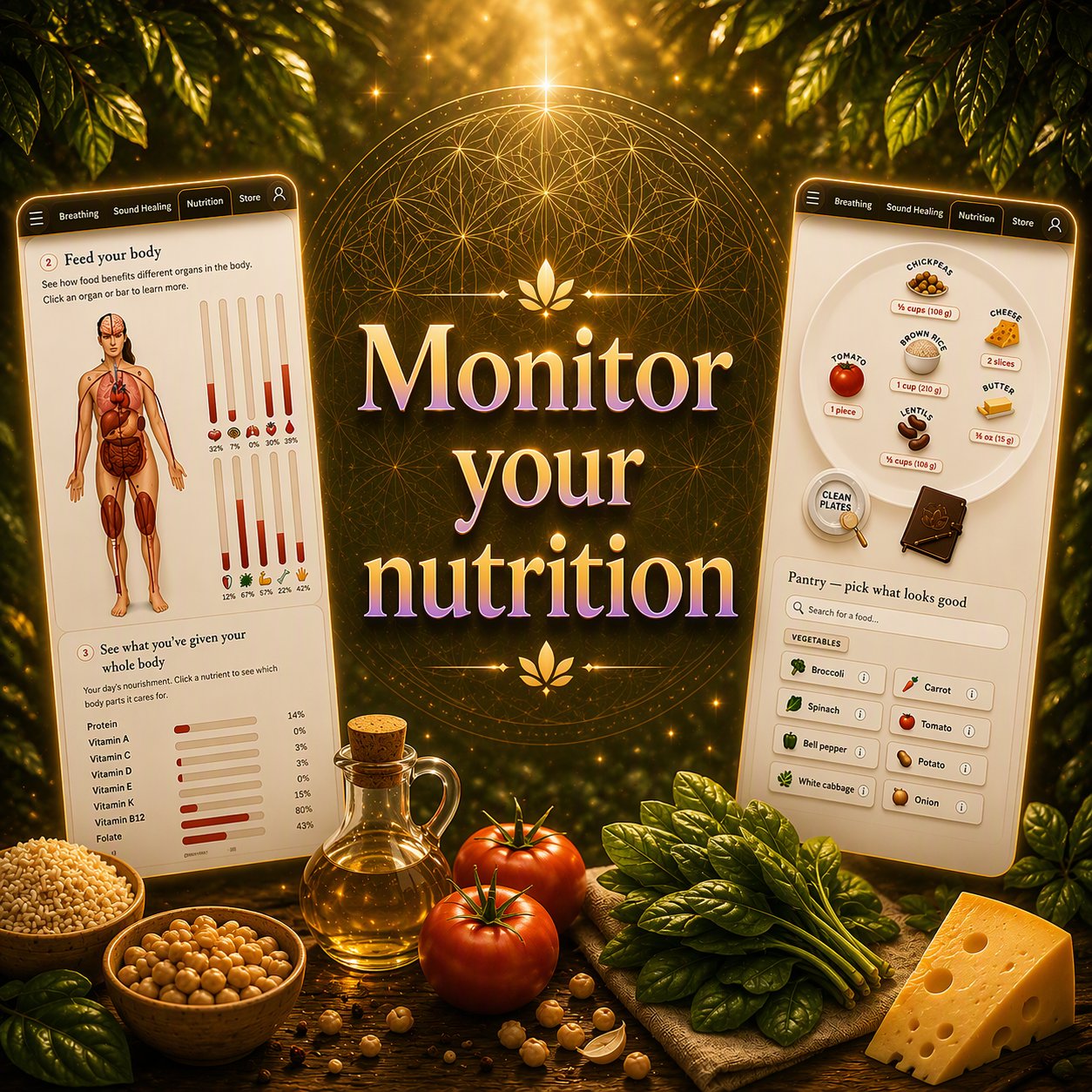
Use Guided Breathing on Holistic Loader for a quick energizing reset, and the Nutrition Tracker to log meals and notice which foods actually support your energy — so you can build a rhythm that lasts all day, without the crash.
Sources & References
The following general resources cover the principles of energy, breathing and nutrition discussed in this article.
- Harvard Health Publishing – How Caffeine Can Rob You of Sleep. Describes how caffeine blocks adenosine and how this affects alertness and sleep quality.
- Harvard Health Publishing – Breath Control Helps Quell Errant Stress Response. Explains how breathing patterns influence the nervous system and overall alertness.
- Harvard T.H. Chan School of Public Health – Carbohydrates and Blood Sugar. Covers how different carbohydrates affect blood sugar and energy levels throughout the day.
- Harvard Health Publishing – The Importance of Staying Hydrated. Explains how even mild dehydration can contribute to fatigue.